
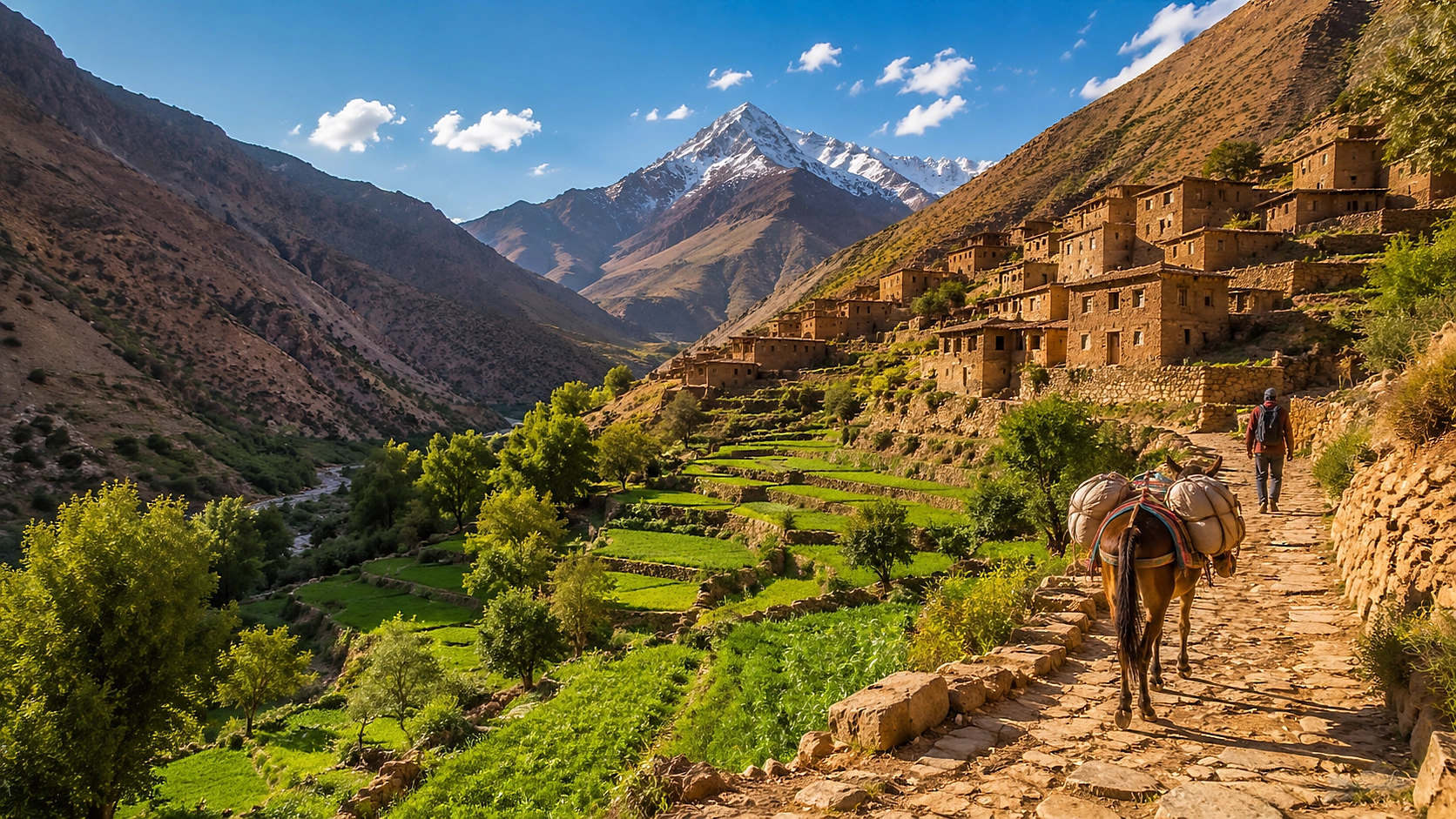

Sixty kilometres south of Marrakech, the High Atlas Mountains rise to over 4,000 metres — and within just one hour of leaving the chaotic medina, you can be hiking through silent Berber villages, crossing mountain streams on stone bridges, and breathing the cleanest air in North Africa.
The Atlas Mountains day trip from Marrakech is one of the most rewarding short escapes in the country — and the village of Imlil is the perfect base for exploring this extraordinary landscape.
Why the Atlas Mountains?
The High Atlas is the backbone of Morocco — a chain of peaks running diagonally across the country from the Atlantic to Algeria. At 4,167m, Mount Toubkal is the highest peak in North Africa and visible on clear days from Marrakech itself.
But the Atlas is not just about the summits. The mountains are home to the Amazigh (Berber) people, who have farmed these valleys for thousands of years in terraced villages clinging to near-vertical slopes. A day trip here is as much a cultural experience as a natural one.
Imlil: Your Gateway to the High Atlas
Imlil sits at 1,740 metres at the foot of the Toubkal massif — about 60 kilometres south of Marrakech. From Imlil, multiple trails lead into the mountains:
- Easy (2–3 hrs round trip): The valley walk along the Rheraya River to the village of Aroumd — crossing a traditional mule bridge and passing Berber farmhouses.
- Moderate (4–5 hrs): Up to the Toubkal Refuge (3,207m) — the base camp for the summit. Stunning views, and a real sense of altitude.
- Challenging (full day): The Toubkal Summit (4,167m) — a serious undertaking best done overnight with a licensed mountain guide.
What to Expect on the Day Trip
Morning: The Drive from Marrakech
Depart Marrakech around 7:30am. The road south climbs quickly out of the Haouz Plain into the foothills, passing through the village of Asni (weekly Saturday Berber market) and into the Rheraya Valley. The drive is spectacular — a succession of river crossings, hairpin bends, and sudden views of snow-capped peaks (October–April).
Late Morning: Imlil Village
Arrive in Imlil around 9am. Begin your walk through the village — mule trains carrying supplies, women in traditional dress, children heading to school on the mountain path. Your guide will introduce you to the landscape, the culture, and the people.
Midday: Berber Lunch
The highlight for many visitors: a traditional Berber lunch in a village home or a mountain gite. Expect tagine slow-cooked over a wood fire, fresh Khobz bread, mint tea, and seasonal salads — all using ingredients grown in the terraced fields around you. Generous, warming, and deeply local.
Afternoon: Trek and Return
After lunch, continue the trail for another hour or so to a panoramic viewpoint before the return walk. Arrive back in Marrakech by sunset.
Best Time to Visit
- Spring (March–May): Wildflowers, waterfalls in full flow, warm days. Peak season for trekking.
- Autumn (September–November): Clear skies, golden light, fewer crowds.
- Winter (December–February): Snow on the peaks — spectacular to photograph. Trails accessible but dress very warmly.
- Summer (June–August): The mountains are cooler than Marrakech. Summit attempts are best in summer.
What to Wear and Bring
- Comfortable walking shoes or light hiking boots (essential — mule paths are uneven)
- Layers — mornings in the mountains are cold even in summer
- Sunscreen and sunglasses (UV is intense at altitude)
- A light rain jacket (cloud and mist can appear quickly)
- Water bottle — at least 1.5 litres per person
- Small dirham for mint tea stops and village stalls
About Your Guide
All Marrakech City Travel Atlas Mountain trips include a licensed Amazigh mountain guide — born and raised in these valleys. They speak English, French, Arabic, and Tachelhit (the local Berber dialect), and can navigate trails that no GPS map will show you.
Note on Mount Toubkal summit: If you wish to reach the summit (4,167m), this requires a 2-day trip with an overnight at the Toubkal Refuge. We arrange this regularly — contact us for availability.
0 Comment